Mar 19, 2026
Ph.D. graduate’s research fuels surgical smoke legislation nationwide
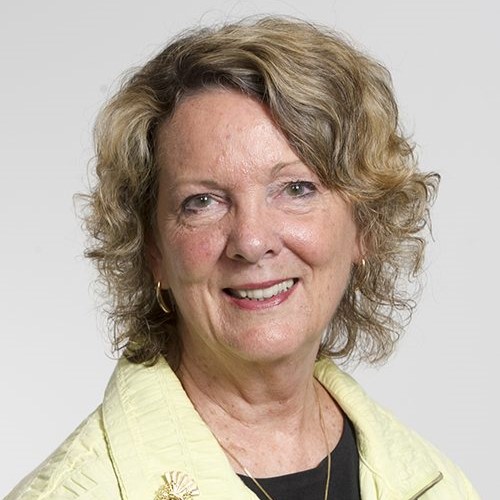
Nearly 20 years after her doctoral studies, a VCU graduate’s dissertation continues to influence life-changing state laws — and might soon make waves at the federal level.
Kay Ball, Ph.D., RN, graduated from the VCU College of Health Professions Ph.D. Program in Health Related Sciences in 2009. For her dissertation, she set out to answer a question many perioperative nurses had quietly lived with for years: Why, despite clear risks, was surgical smoke still treated as an unavoidable part of the operating room?
Lasers, harmonic scalpels, electrosurgery tools and other specialized devices emit smoke when used during a variety of surgical procedures, affecting teams in the operating rooms nationally. “For years we'd been breathing in surgical smoke when we cut and coagulated tissue,” said Ball, a professor at Otterbein University in Westerville, Ohio, where she earned her nursing degree in 1983. “I’d go into a smoky case and leave with a headache; nurses with allergies or asthma would have even worse experiences.”
Ball’s dissertation, Surgical Smoke Evacuation Guidelines: Compliance Among Perioperative Nurses, examined why compliance with smoke evacuation recommendations remained inconsistent. Drawing on survey data from hundreds of nurses, Ball identified a sobering trend that would become central to her work’s long-term impact: Nurses who work in surgery report twice the incidence of respiratory problems as compared to the general population.
When Ball’s research was published in 2010, smoke evacuation was not mandatory in most operating rooms, despite mounting evidence that surgical smoke contains toxic gases, fine particulate matter and potentially infectious material. It took nearly a decade until Rhode Island became the first state to pass legislation mandating the use of surgical smoke evacuation systems in applicable health care facilities, with Ball’s dissertation as a major reference point.
By the time Ball repeated her study in 2022, only four states — Rhode Island, Colorado, Illinois and Kentucky — had passed laws requiring surgical smoke evacuation. Yet the evidence of harm continued to mount.
Ball noted several extreme cases, including a surgeon who required a bilateral lung transplant and, just last year, a nurse who died due to excessive inhalation. The persistence of the problem pushed her work further into the legislative arena, as it provided data lawmakers couldn’t ignore.
Today, 20 states have enacted surgical smoke evacuation laws. Ball’s testimony helped move policy forward in her home state, where legislation took effect in October 2024. She credits professional organizations such as the Association of periOperative Registered Nurses (AORN) for extending her publication’s reach and advocating vehemently for change. “The American Nurses Association is trying to help AORN go after national legislation — so the 30 states without laws, we won’t have to worry about,” she said.
Ball’s influence has even crossed borders. “Across the world, they're using my research in different studies, and trying to compare their compliance with the compliance in the United States,” she said. “One idea has given birth to a lot of actions.”
That reach highlights the lasting value of the practice-based research training Ball received through the College of Health Professions, skills that continue to pay dividends in operating rooms across the country. “I am very proud to have attended VCU,” she said. She further encouraged current doctoral students to research issues they’re passionate about solving: “As a nurse or whatever role you fill in health care, you can be part of a change process.”