Mar 10, 2026
Ph.D. research project aims for oral health equity for Virginians with developmental disabilities

For many individuals with intellectual and developmental disabilities, a visit to the dentist can be overwhelming – sometimes impossible.
Now, a new $200,000 grant is positioning Virginia Commonwealth University to help change that.
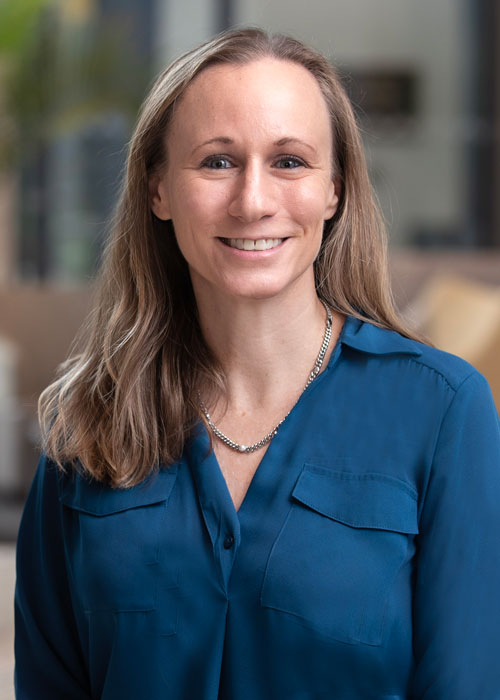
In January, the Virginia Board for People with Disabilities (VBPD) awarded funding to VCU to expand access to oral health care by training dental providers to create Sensory Adapted Dental Environments (SADEs). The project is led by Stacey Reynolds, Ph.D., director of the Ph.D. Program in Health Related Sciences and an occupational therapist, and Janina Golob Deeb, D.M.D., M.S., a periodontist in the VCU School of Dentistry and current Ph.D. student.
People with intellectual and developmental disabilities often face significant barriers to routine dental care. The sensory demands of a dental visit – bright lights, unfamiliar sounds, close physical proximity, tastes and textures – can heighten anxiety and distress, particularly for individuals with sensory differences.
“We know that people with intellectual and developmental disabilities have a really hard time with the whole experience of dental care,” Reynolds said. “Nobody really likes somebody else poking around in their mouth. But you’re working with people who may already have heightened sensory differences. We are advocating for environments where individuals with different needs and caregivers can better know what to expect.”
Without accommodations, those visits can become so stressful that some patients avoid care altogether or are referred to specialty clinics or hospital-based sedation for procedures that might otherwise be managed in a community setting.
“In a dental practice, anything that deviates from the routine slows efficiency,” Golob Deeb said. “It’s a learning curve. Some providers will find room for that, but it takes time and experience to feel comfortable.”
She recalls three young men with autism in her private practice in Arizona who required years of relationship-building before they could comfortably complete routine cleanings. “It would be helpful if there was some sort of instructional guide – what works – so that you can apply that, rather than try to figure it out on your own,” she said.
Bringing sensory adaptations to Virginia
The project will implement evidence-based SADEs, an approach pioneered and studied in California, with VCU being the first to test and scale the model. Leah Stein Duker, Ph.D., OTR/L, an occupational therapist at the University of Southern California who developed this approach, will collaborate with the VCU team.
The initiative will focus on training dental providers and staff to reduce overstimulation and sensory-related distress through practical, low-cost adaptations. Those might start with weighted vests or blankets to promote calming pressure and sunglasses or tinted eyewear to reduce glare. But adaptations also could extend to blackout curtains or modified lighting; visual distractions such as projectors or bubble tubes; and flavor options for dental products to accommodate taste sensitivities.
“Grant funding will also support the development of family-centered preparation tools that promote comfort, predictability and dignity,” Reynolds said. This includes “social stories” – short, simple narratives that explain what to expect during a dental visit – and video modeling resources that families and providers can use ahead of appointments.
The goal is not to redesign entire clinics, but to equip providers with adaptable tools and strategies that make care more inclusive. The VCU dental curriculum includes some instruction on treating patients with special needs.
Taking the training on the road
Rather than centralizing the effort at VCU, the team will deliver mobile, experiential training sessions across Virginia. The project team will strive to host two training events in five geographic regions over the two-year grant period.
“We’re going to take our show on the road,” Reynolds said. Each host site – whether it’s a university, community college or dental clinic – will set up a mock dental bay where participants can try the equipment, explore sensory-friendly materials and ask questions.
An advisory board composed of adults with developmental disabilities and caregivers will help the team create supporting materials that are practical and responsive to real-world needs.
Importantly, the grant focuses on training providers and developing resources, rather than directly testing patient outcomes. However, participating clinics will be encouraged to gather feedback from caregivers and clients about their experiences in sensory-adapted settings.
“The Board is excited to be collaborating with Virginia Commonwealth University in order to provide dental professionals and families with the resources they need, so they can provide accessible dental care to people with developmental and other disabilities,” said Teri Morgan, VBPD’s executive director, in formally announcing the award.
Interdisciplinary impact and Ph.D. scholarship
The collaboration reflects the interdisciplinary mission of VCU’s Ph.D. Program in Health Related Sciences.
“I love connecting with different schools and colleges in my research efforts,” Golob Deeb said. “Unless you have the right person on the other end, it’s very difficult to make that collaboration come alive. When I met Dr. Reynolds, it really put a face to the collaboration. You can create something meaningful that spans across disciplines.”
For Reynolds, the project marks a personal and professional evolution.
“I spent the first 10 to 15 years of my career really doing lab-based work and trying to understand sensory differences at a neurological level,” she said. “At this point, I want to see some of that work translate into meaningful things in communities.”
By pairing OT expertise in sensory regulation with clinical dental experience, the team hopes to empower community-based providers to treat more patients with developmental disabilities. In turn, that will help to reduce families’ and patients’ reliance on specialty centers and riskier hospital-based sedation when possible.
“Collectively, these efforts aim to improve access to preventive dental care,” Reynolds said, “and enhance oral health equity for Virginians with developmental disabilities.”