Mar 23, 2026
Prescribing connection: Ph.D. student researches power of community for dementia patients
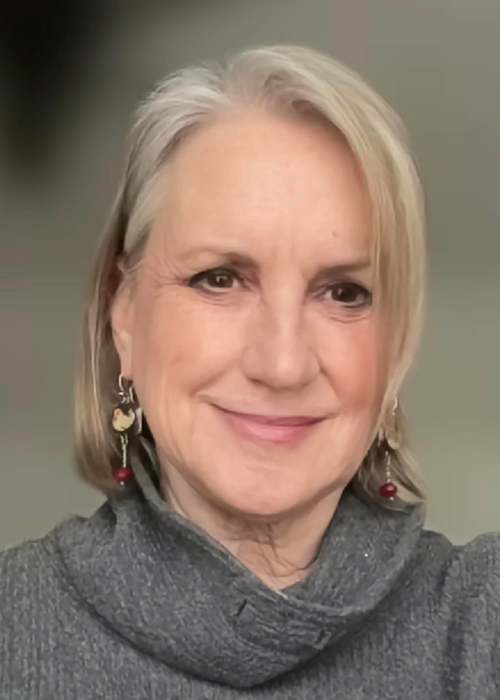
While dementia care largely focuses on medical interventions, social isolation remains an overlooked factor shaping quality of life for patients and their loved ones. Cathleen “Cate” Hawks, a student in the VCU College of Health Professions’ Ph.D. Program in Health Related Sciences, hopes her doctoral research, aided by a large private donation, will change that.
After years in senior leadership roles in state government and founding a nonprofit supporting foster and adoptive families, Cate transitioned into geriatric care. That work — first through Jewish Family Services of Richmond and later with the VCU College of Health Professions Department of Gerontology’s Richmond Brain Health Initiative — has sharpened her focus on gaps in dementia care. She began her Ph.D. studies in 2023 at the age of 65 and currently serves as a dementia practitioner in the VCU Health Guiding an Improved Dementia Experience (GUIDE) program.
As Hawks explains, “There is a need to go beyond usual medically-based dementia care,” as individual needs extend beyond medical intervention alone. Her doctoral research responds directly to that reality, examining how psychosocial, community-based care can complement clinical care and improve outcomes such as loneliness, depression and caregiver strain.
Hawks’ dissertation, which she plans to defend this year, builds on the feasibility testing of the Forget Me Knot Café, a social program she developed in September 2025 to foster engagement, purpose and connection. Designed for people affected by dementia — what Hawks often calls “brain change” — the program offers structured activities such as mindfulness, art and music therapy and book discussions.
The café is helping Hawks lay the groundwork for a formal research study examining how participation affects social isolation and loneliness among dementia care “dyads,” or individuals with dementia and their care partners. Hawks’ research will explore the most effective ways to build supportive community groups for this population.
“This is a form of what we call social respite,” Hawks said, “an opportunity for people to have increased engagement, to fight loneliness and to improve those health outcomes. It can have a profound impact on those who otherwise might feel that there was nothing left for them to do except wait.”
That impact is evident in the experiences of various participants, including those who help host the Forget Me Knot Café at Fifth Baptist Church in Richmond’s West End. The church, led by Dr. Earl M. Brown, provides various contributions and resources in addition to the space needed.
“The café and the community help us understand the importance of engagement — physical, mental, emotional,” one anonymous caregiver said. “When you get to be 65 years old, if you sit in front of the TV all day, it’s bad for you, whatever your most acute diagnosis is. That’s extra true for those with dementia and similar conditions.”
“I feel seen, heard and appreciated for being present,” said another participant.
Running the Forget Me Knot Café at Fifth Baptist — a predominantly Black church — supports an important subject of Hawks’ research: the effects of collaboration between health care organizations and African American populations. According to Hawks, African Americans are twice as likely to be diagnosed with dementia compared with the general population; their risk of being diagnosed in the later stages of dementia-causing diseases is 50% higher than average.
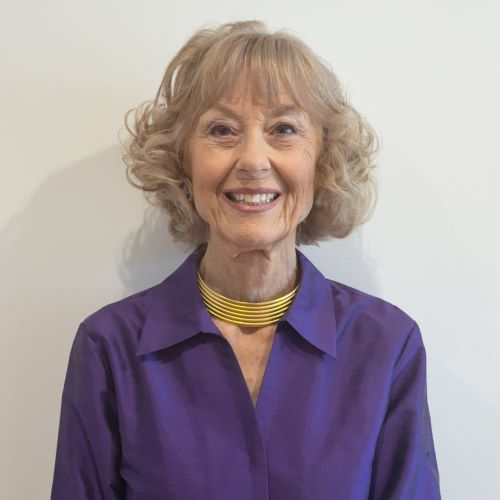
Donor support has been critical to the project’s growth, particularly from Jacquelyn Pogue, whose investment has enabled Hawks to expand programming and lay the groundwork for formal research. Hawks’ mission is especially meaningful to Pogue, whose husband, Robert, died of vascular dementia in 2018. The couple supported various causes until the end of his life, including college scholarships and public television documentary films.
Pogue sees partnering with Hawks as a natural continuation of her and her husband’s life of philanthropy. “We’ve always sought to provide resources for students, projects and organizations that support a more compassionate, just, sustainable and spiritually awakened world,” she said.
Hawks’ pilot study will help inform future development of the Forget Me Knot Café, which will include the addition of a group for people with early-onset diagnoses. The café will also collaborate this summer with VCU School of the Arts Adjunct Professor of Music Therapy Robin Rio and the Cultural Arts Center of Glen Allen to form a choir.
Hawks hopes her work will lead to a randomized controlled trial of a fully evolved program that can be generalized to the dementia dyad population. Ultimately, she would like to see health care providers adopt “social prescriptions” as a standard of care for neurological patients. These would take the form of clinician-recommended, nonmedical interventions that address isolation, such as community engagement opportunities and caregiver-supported group activities.
By integrating scholarship, community partnership and compassion, Hawks’ research is helping reimagine what dementia care can be. “Without research, nothing gets better,” she said. “Every dollar that goes to research is another opportunity to change a life.”
Those wishing to financially support Hawks’ research can donate to the Medical College of Virginia Foundation and indicate the funds are for the Forget Me Knot Café. College of Health Profession Senior Director of Development T. Greg Prince, Ed.D., can help facilitate your gift if needed. He can be reached at tgprince@vcu.edu or (804) 828-3269.